

Peptide Sciences, one of the most recognized U.S.-based suppliers of research peptides, has announced it is voluntarily ceasing operations and discontinuing the sale of all its products. The move marks one of the most high-profile exits the research peptide sector has seen, and it comes at a time when federal pressure on the industry is intensifying fast.
At a glance
- Peptide Sciences posted a shutdown notice on its website stating it has voluntarily decided to discontinue the sale of its research products.
- The closure has not been publicly linked to a specific enforcement action, but it coincides with escalating scrutiny from federal agencies including the DOJ, FBI, and FDA.
- Researchers and regular buyers are now scrambling to find alternative suppliers as one of the most visible brands in the space goes dark.
- The shutdown may signal the end of an era for easy online access to injectable research peptides sold direct to consumers.
Who Was Peptide Sciences?
Founded as a specialist in the synthesis of highly purified peptides, proteins, and amino acid derivatives, Peptide Sciences built a decade-long reputation among academic researchers, contract labs, and health-conscious consumers. The company claimed typical purity levels exceeding 99%, partnered with WHO/GMP and ISO-certified manufacturers, and positioned its entire catalog strictly for in-vitro and laboratory use.
Over time, it attracted a broad customer base drawn to compounds spanning growth hormone secretagogues, metabolic peptides, and anti-aging peptides. Products like MOTS-c and senotherapeutics made regular appearances in its catalog. With fewer than 25 employees and revenue estimated under $5 million, it was small by pharmaceutical standards, but its influence in the research peptide space far exceeded its size.
What the Shutdown Notice Says
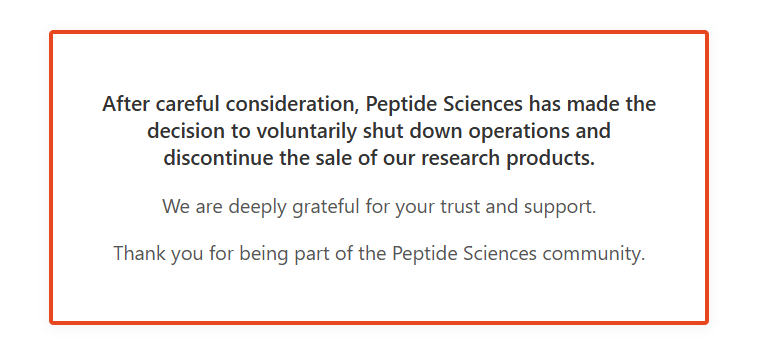
The notice now displayed on Peptide Sciences’ website is brief. The company states that after careful consideration, it has decided to voluntarily shut down operations, thanking customers for their trust and support. No effective date is specified. No information about outstanding orders, inventory transfers, or the fate of customer accounts has been provided. That lack of detail has left regular buyers and downstream resellers searching for answers.
The Regulatory Climate Behind the Exit
The timing is hard to ignore. In late 2025 and early 2026, federal enforcement against “research-only” peptide vendors accelerated sharply. Coordinated action from the Department of Justice, FBI, and FDA targeted companies supplying compounds like semaglutide and tirzepatide without pharmaceutical licensing. Industry figures publicly warned the online peptide market was being dismantled.
At the same time, the FDA has been reshuffling its official peptide lists, moving some compounded peptides from a prohibited category to one that can be prepared with medical oversight. That shift has created both opportunity and confusion. As Politico reported earlier this month, regulators are actively reassessing their posture on peptides, even as scrutiny of injectable research materials sold direct to consumers tightens.
Legal disputes have pushed other companies to restrict their offerings or exit the space entirely, sometimes without any formal announcement or regulatory filing. The BPC-157 legal status debate is one example of how rapidly the ground is shifting under vendors who have long operated in a gray area.
What This Means for Researchers and Clinicians
For labs that relied on Peptide Sciences’ catalog and documentation, the loss of a familiar high-purity source is a real logistical problem. For clinicians integrating peptide therapy research into patient protocols, the closure leaves researchers and clinicians without one of the most established sources of high-purity research peptides in the U.S. market.
The exit does not mean peptides themselves are going away. Compounding pharmacies operating within the medical system, licensed pharmaceutical manufacturers, and regulated suppliers are still active. What is ending is the relatively unregulated online vendor model that thrived for the better part of a decade.
Those exploring peptide stacks or weight management protocols involving compounds like semaglutide and tirzepatide will need to work through channels operating within current regulatory frameworks going forward.
Bottom Line
Peptide Sciences’ closure is a landmark moment. It removes one of the most visible and long-standing brands from the research peptide space, and it sends a clear signal about where enforcement is headed. Companies straddling the line between legitimate research supply and quasi-retail sales to consumers are operating in shrinking territory.
The broader peptide ecosystem will adapt. But the days of easy, anonymous online access to injectable peptides from unregulated vendors are numbered, and the disappearance of Peptide Sciences may be the clearest sign yet.
Frequently Asked Questions
Did Peptide Sciences shut down because of a specific FDA action?
The company has not publicly linked its closure to any specific enforcement action or regulatory change. The shutdown notice offers no explanation beyond a voluntary decision.
Will outstanding orders be fulfilled?
No information has been released about the handling of outstanding orders. Customers should check the Peptide Sciences website directly for any updates.
Are research peptides now illegal to buy?
Not categorically. The legal and regulatory status of research peptides varies by compound and jurisdiction. Some peptides remain available through licensed compounding pharmacies under medical oversight.
Where can researchers find alternative suppliers?
Legitimate alternatives include compounding pharmacies operating within FDA guidelines and licensed pharmaceutical-grade suppliers. Any sourcing should be done under appropriate medical or research oversight.